if I read you
what I wrote bear
in mind I wrote it
Oct 24–26, 2024
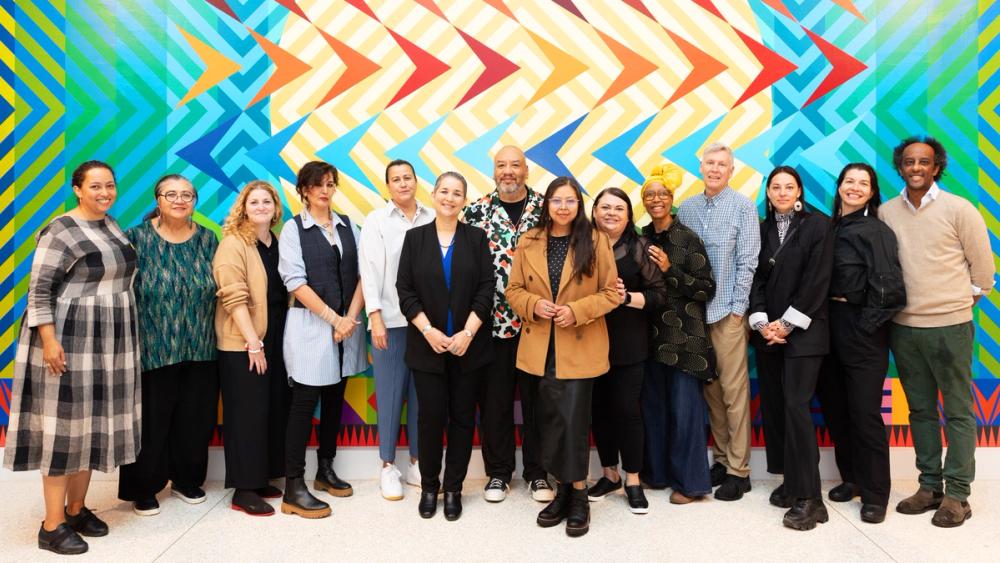
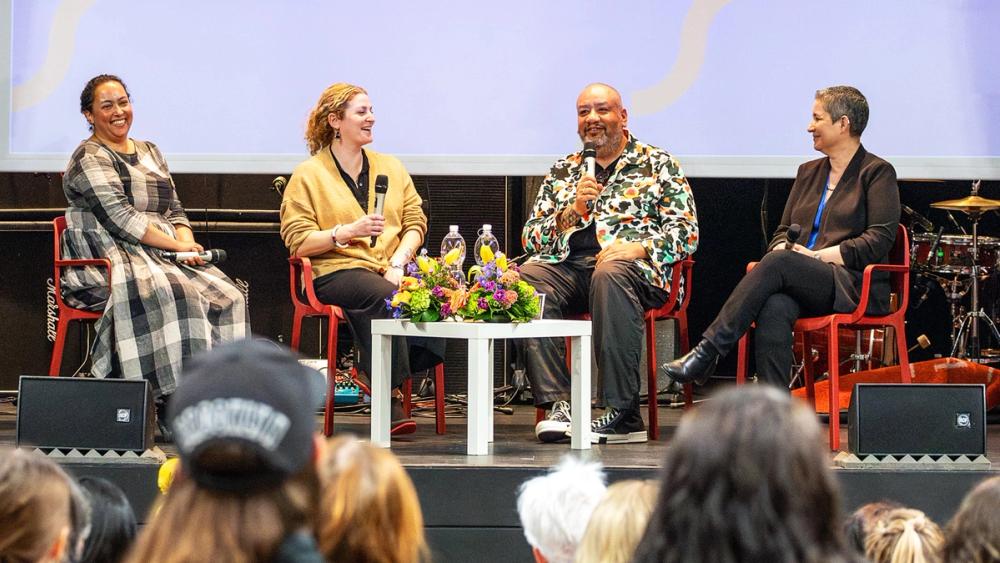
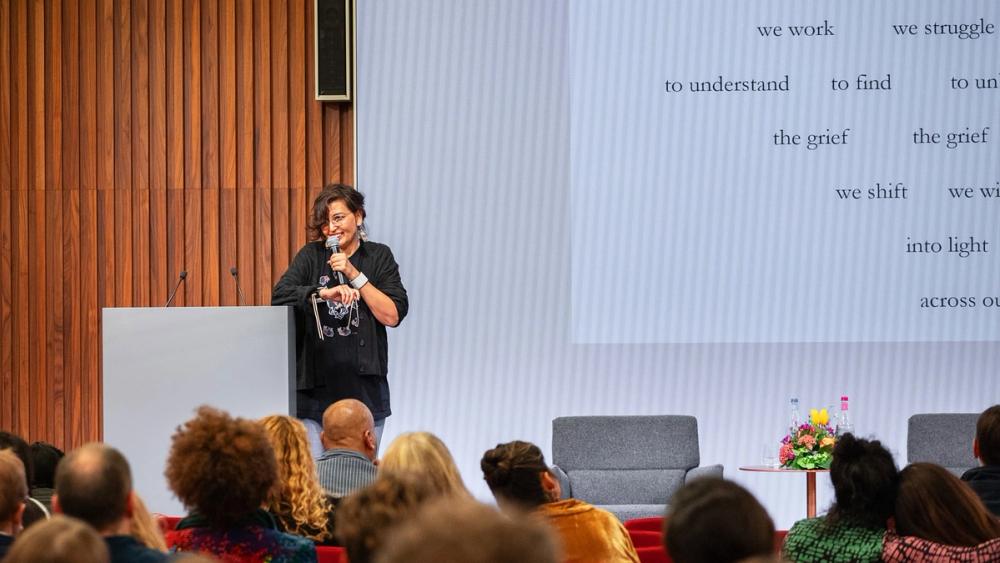
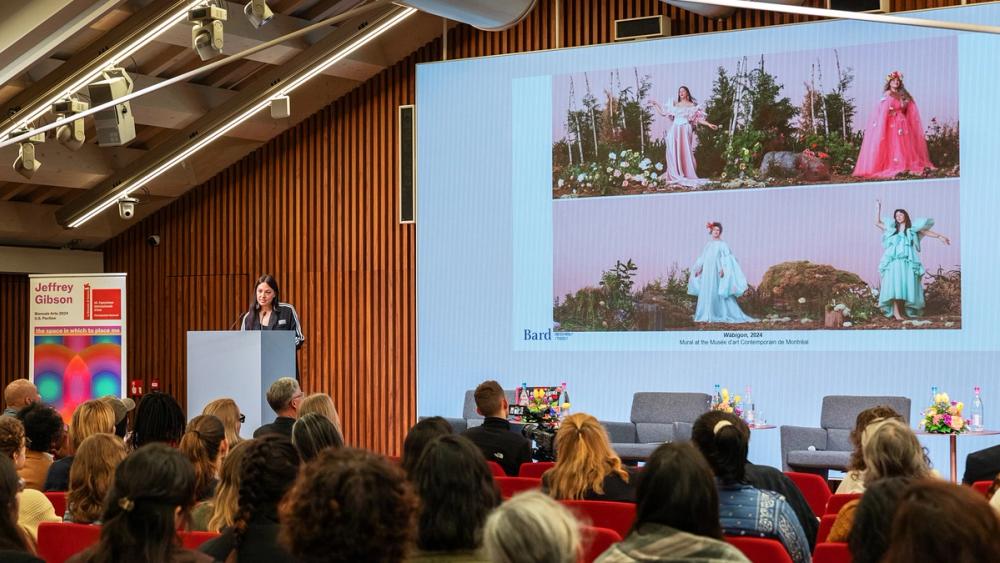
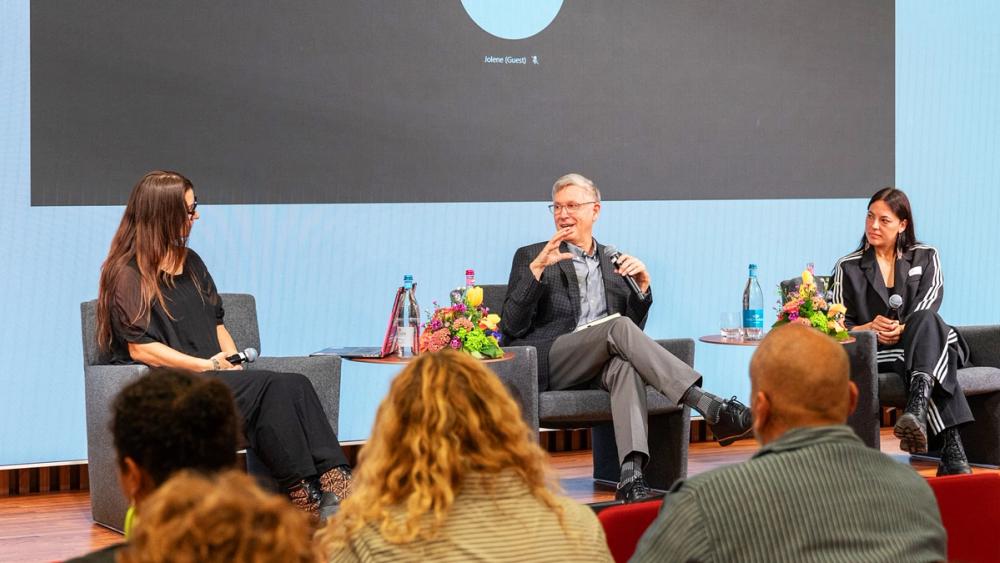
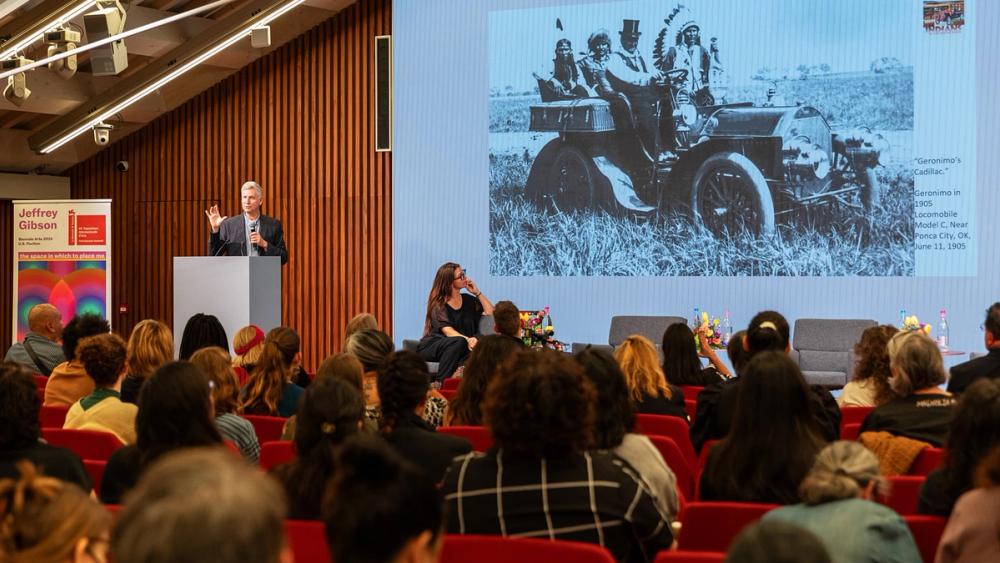
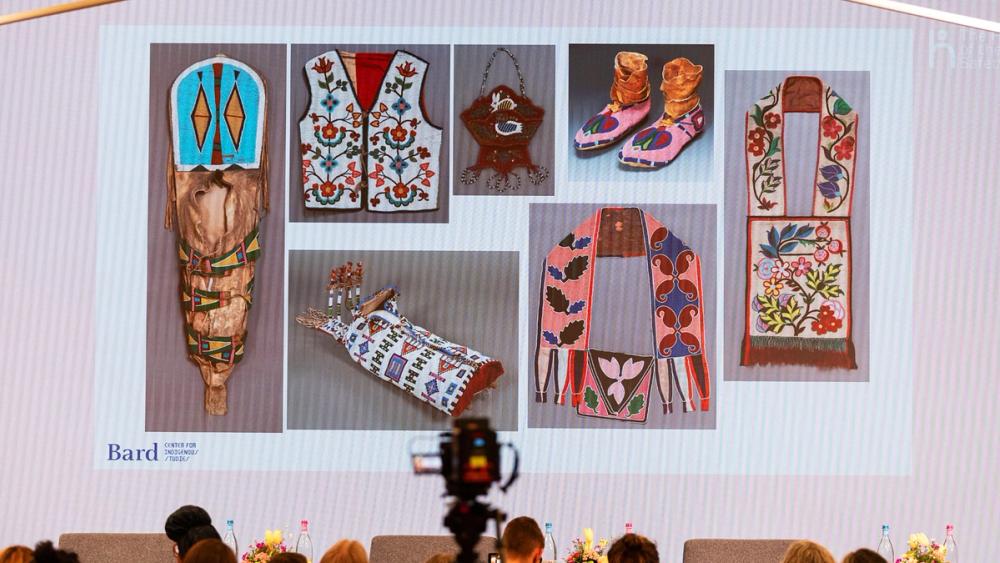
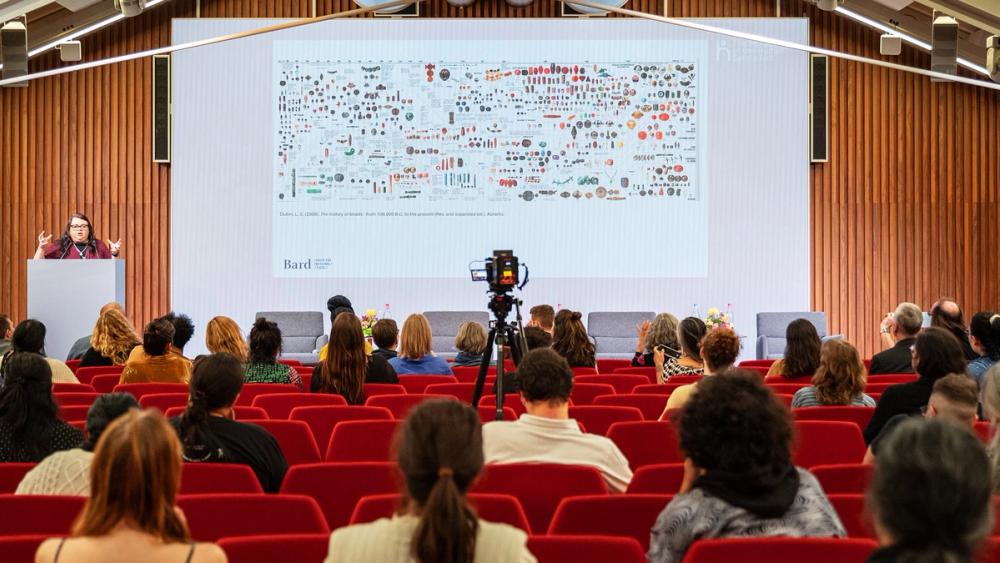
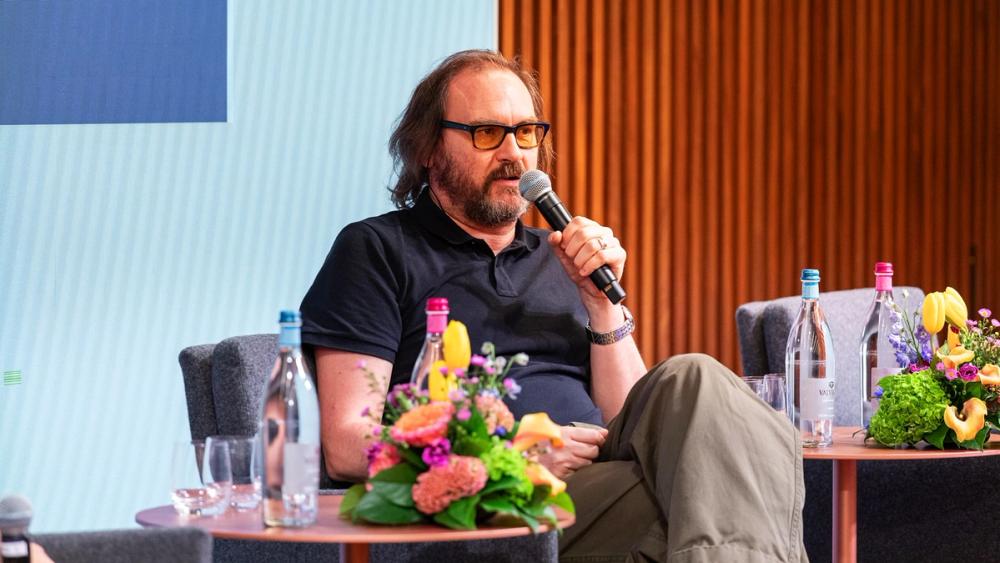
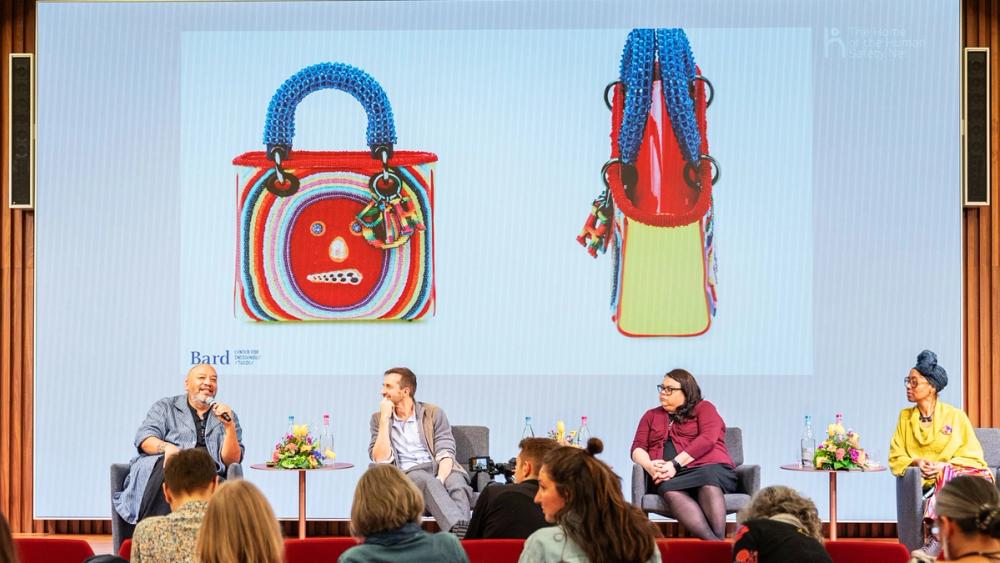
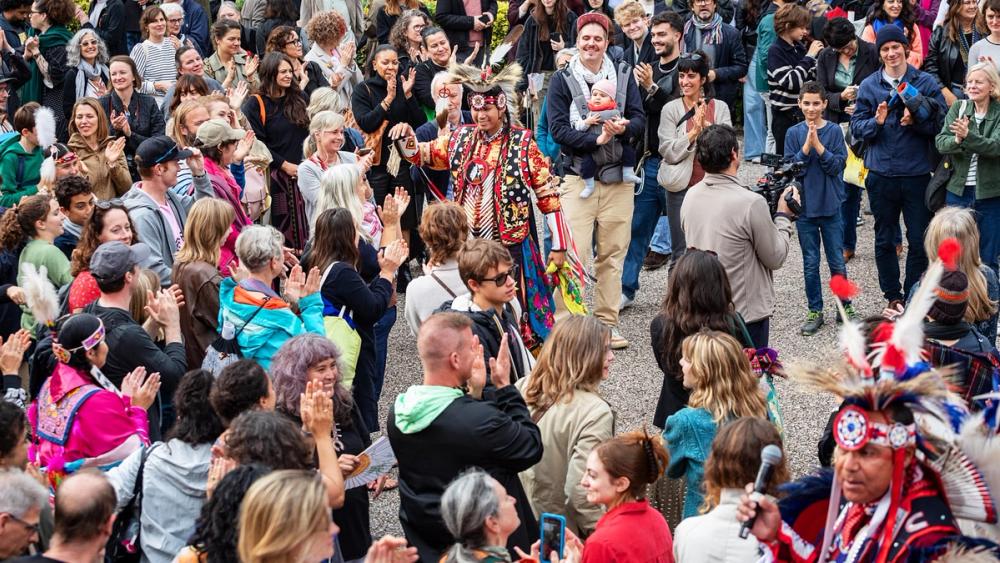
A Convening to consider Jeffrey Gibson: the space in which to place me was organized by the Bard College Center for Indigenous Studies, an educational partner of the U.S. Pavilion. The convening was held on October 24–26, 2024, at Teatro Ca' Foscari, on the Santa Marta campus of Università Ca' Foscari Venezia, in collaboration with the New Institute Centre for Environmental Humanities (NICHE), The Home of The Human Safety Net/Fondazione Generali, and the U.S. Pavilion. Panel discussions and performances explored the relationship of Indigenous North American art and cultures to global histories and featured a diverse group of speakers, academics, theorists, artists, and performers.
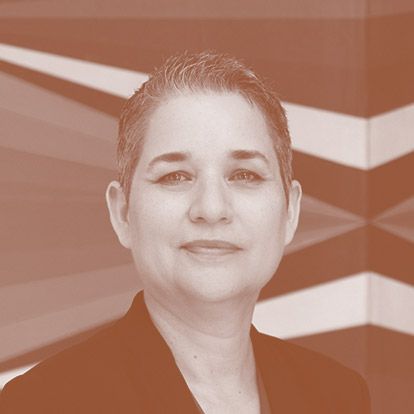
Kathleen Ash-Milby is the Curator of Native American Art at the Portland Art Museum, appointed in 2019. Previously, she organized numerous solo exhibitions at the Smithsonian National Museum of the American Indian with artists including Oscar Howe (2022), Kay WalkingStick (2015), Meryl McMaster (2015), C. Maxx Stevens (2012), and Julie Buffalohead (2012). Her critically acclaimed thematic group exhibitions of Native art across a range of media include Transformer: Native Art in Light and Sound (2021) and Off the Map: Landscape in the Native Imagination (2007). From 2001 to 2005, she was curator and co-director of the American Indian Community House Gallery in New York City, a foundational community-based nonprofit gallery. Ash-Milby has published widely, including contributions to books, exhibition catalogues, and publications such as Art in America and Art Journal. In 2015, she was a fellow in the Center for Curatorial Leadership Program in New York. A member of the Navajo Nation, she earned her master of arts in Native American art history from the University of New Mexico.
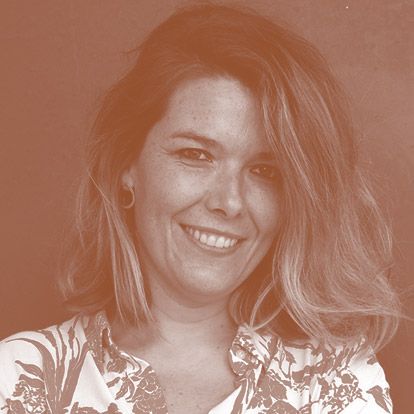
Cristina Baldacci is an art historian and associate professor in History of Contemporary Art at Ca’ Foscari University of Venice (Department of Philosophy and Cultural Heritage), where she teaches Contemporary Art and Photography. She is an affiliated faculty member at THE NEW INSTITUTE Centre for Environmental Humanities (NICHE), where she coordinates the “Ecological Art Practices” research cluster and the “Art Ecologies” series. Her research interests focus mainly on Art, nature and ecology; Art and the Anthropocene; Archiving and collecting as artistic practices; Appropriation, montage and reenactment in contemporary art – all topics on which she has
published extensively.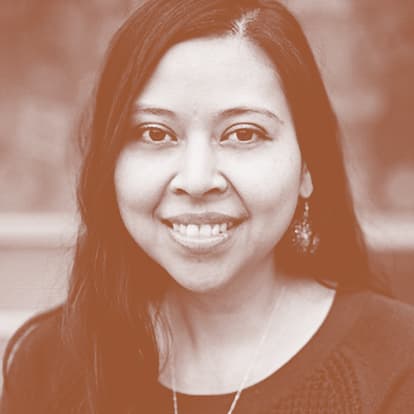
Dr. Miranda Belarde-Lewis is an independent curator and writer who loves Native art. She works to highlight and celebrate Native artists, their processes, and the exquisite pieces they create. She is a citizen of Zuni Pueblo in New Mexico and a Takdeintáan Clan member of the Tlingit Nation. She works with tribal, state, federal and international institutions to promote Native artists and their work. Curated exhibitions include Sho Sho Esquiro: Doctrine of Discovery (2021) at the Bill Reid Gallery in Vancouver, B.C., Preston Singletary: Raven and the Box of Daylight (2018) at the Museum of Glass; Alison Bremner (Marks): One Gray Hair (2017) and Storme Webber | Casino: A Palimpsest (2017) at the Frye Museum in Seattle. Belarde-Lewis is an Associate Professor and the inaugural Jill and Joe McKinstry Endowed Faculty Fellow of Native North American Indigenous Knowledge at the University of Washington’s Information School.

Akalei Brown is the Deputy Director and founder of the Colorado Native Organization based out of RedLine Contemporary Art Center in the Historic Five Points neighborhood of Denver. She also works as an independent non-profit development consultant, working with Native led nonprofits across the United States. Her passion is serving as an advocate for foster youth, providing life skills trainings to youth who are about to age out of the foster care system. Akalei is Taos Pueblo and Kanaka Maoli and an empowered emancipated foster youth from Los Angeles County. She graduated UC Davis with a bachelors in Native American Studies and Community & Regional Development. Akalei is an accomplished fashion show coordinator and designer, creating vibrant pieces of wearable art and infusing performance art into every show. She has hosted shows at The Denver Art Museum (2023), Bavaria Germany (2023) and at RedLine (2023). Currently Akalei serves on the board of ayACon, Colorado’s only Indigenous Comicon. In addition to her many hats, she is one of the founders of the Colorado Inter-Tribal Dancers; a philanthropic dance troupe committed to raising awareness about the Colorado Native Organization. In February, they were invited by the NFL to dance at the Super Bowl Experience opening for the Super Bowl. Akalei performed and danced in collaboration with Jeffrey Gibson at the Venice Biennale, along with 26 champion dancers in April of 2024 as well as October of 2024.

Haleakala Brown is 12 years old in the 7th grade. She is in Student Government serving as a Senator, she is in a choir called VOCO, she is on the Volleyball Team and is a member of a weekly running club. Haleakala has been dancing at powwows since she could walk. She is an accomplished jingle dress dancer, winning titles across the United States. Halekala is a member of the Colorado Inter-Tribal Dancers. She is Mni Coujou Lakota, Taos Pueblo and Kanaka Maoli. Halekala is an entrepreneur and founded her first business Lakota Body Care (LBC) Colorado’s only Native American soap company in 2021. All of her products are organic handmade in small batches with traditional Native plants. Her products have been shipped to all 50 states, all provinces in Canada and various countries around the world. Haleakala has traveled to pitch contests and has won competitions against adults many times over. Her dream is to have her business in major retail stores, so Natives can see themselves represented on the shelves. Haleakala performed with the Colorado Inter-Tribal Dancers in collaboration with Jeffrey Gibson at the Venice Biennale, in April of 2024 as well as October of 2024.
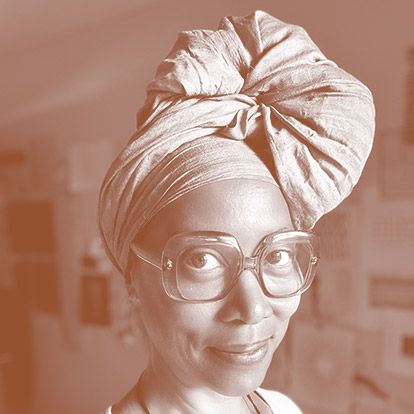
Sonya Clark is an artist and the Winifred L. Arms Professor of Art at Amherst College in Massachusetts. Previously, she held a University Professorship in the School of the Arts at Virginia Commonwealth University where she served as chair for the Craft/Material Studies Department for over a decade. She earned an MFA from Cranbrook Academy of Art and was honored with their Distinguished Alumni Award in 2011. She holds a BFA from the School of the Art Institute of Chicago where she received an honorary doctorate in 2023. Her first college degree is from Amherst College where, in 2015, she also received an honorary doctorate. In 2021, she was awarded additional honorary doctorates from Franklin and Marshall College and Maine College of Art. Her work has been exhibited in over 500 museums and galleries in the Americas, Africa, Asia, Europe and Australia. Clark is the recipient of many awards including a United States Artist Fellowship, Anonymous Was a Woman Award, Rappaport Prize, Art Prize, Pollock Krasner Award, Art Matters Grant, and several others. She been an artist at the Red Gate Residency in China, the BAU Camargo Residency in France, the Rockefeller Bellagio Residency in Italy, the Smithsonian Artist Research Fellowship in DC, the Civitella Ranieri Residency in Italy, Yaddo Residency in NY, Affiliate Fellowship at the American Academy in Rome, Indigo Arts Alliance in Maine, Bogliasco Residency in Italy, Black Rock Senegal Residency, and others. Her work has been favorably reviewed in the New York Times, Le Monde, Sculpture, Art in America, Philadelphia Inquirer, Washington Post, Time, Los Angeles Times, Hyperallergic, Mother Jones, Huffington Post, ArtForum, PBS, NPR, BBC and many others.

Angelyn Connywerdy Ts’olsauma (Angel Woman) is Kiowa, Comanche, and Caddo. She comes from the Quoetone (Kiowa), Keahbone (Kiowa), Connywerdy (Comanche), and Henry (Caddo) families. She is a graduate of the University of Oklahoma, having received a Magna Cum Laude B.A. in Journalism and Mass Communication and a minor in Native American Studies and Social Justice. She has danced with the Oklahoma Fancy Dancers Native Dance Troupe her whole life, traveling across the United States and overseas to showcase and share her culture. She is the Indigenous Journalists Association OU Chapter President, the Treasurer for Kiowa Club OU, and a co-founder and producer of the Natives Decolonize News (N.D.N) podcast out of Gaylord College of JMC. She serves as the Metro Caddo Cultural Club Princess and was a teacher candidate for the Kiowa Language and Culture Revitalization Program.

Kevin Connywerdy is a Native American artist, traditional craftsman and dance performer of the Comanche and Kiowa Nations. He studied Fine Arts at Bacone College in Muscogee, OK, and the University of Oklahoma in Norman, Oklahoma. He is renowned for his traditional Indian feather-work and beadwork, and has been commissioned by museums and private collectors. His knowledge is acquired through observations and teaching from tribal elders. Kevin serves as an artist-in-residence with the State Arts Council of Oklahoma and the Oklahoma Fancy Dancers. Kevin ranks among the World Class Champions as a Fancy War Dancer, competing in pow wows at the national and world levels, and specializes in the eagle, shield and hoop dances. He has had cultural exchanges with the Indigenous people of Siberia and received a letter of appreciation from the US Ambassador to Azerbaijan for representing the United States and Oklahoma as a cultural ambassador. He has also appeared in television and in the movies. Kevin provides personal training in American Indian cultural arts, life ways and dance in Oklahoma, nationally and internationally, and served as director of Four Winds Intertribal Program. He enjoys educating and entertaining audiences in all aspects of Indian culture–past, present and future. He is currently employed at the University of Oklahoma.
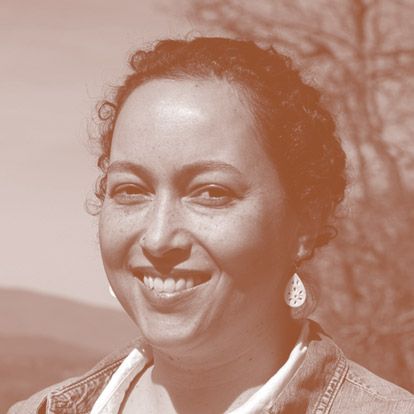
Christian Ayne Crouch is Dean of Graduate Studies, Professor of History and American and Indigenous Studies, and Director of the Center for Indigenous Studies at Bard College. She is an award-winning historian, author of Nobility Lost (Cornell 2014), and has published on topics in Atlantic military and material culture, French empire, and Indigenous and African diasporic history in journals such as the Early American Studies, William and Mary Quarterly, Panorama, Journal of the Early Republic as well on contemporary Indigenous arts, including in Beyond the Horizon (2020) and Making American Artists (2022). Her research has been supported by institutions such as the American Philosophical Society, Harvard University’s Hutchins Center for African and African American Research, the Newberry Library, the Yale Center for British Art, and the John Carter Brown Library. Her current book project, Queen Victoria's Captive: A Story of Ambition, Empire, and a Stolen Ethiopian Prince explores the human and material consequences of the 1868 East African Maqdala Campaign. She also works in contemporary Native American art curation and criticism, serving as a consultant, speaker, and curatorial advisor for the Hessel Museum, the Pennsylvania Academy of Fine Arts, and the Brooklyn Museum's exhibition Jeffrey Gibson: When Fire is Applied to a Stone It Cracks (2020). She holds a Ph.D. from New York University and an A.B. with honors from Princeton University.
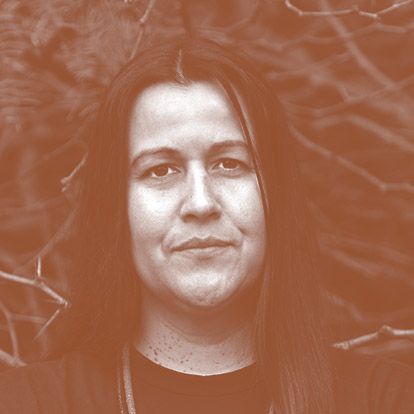
Natalie Diaz was born on the Fort Mojave Indian Village in Needles, California, on the banks of the Colorado River. She is Mojave and an enrolled member of the Gila River Indian Tribe (Akimel O’odham). Diaz is the author of Postcolonial Love Poem, winner of the Pulitzer Prize in Poetry, finalist for the National Book Award, Forward Prize in Poetry, and Los Angeles Times Book Prize, and winner of a Publishing Triangle Award. Her first book, When My Brother Was an Aztec, was winner of an American Book Award. She is a MacArthur Foundation Fellow, a Lannan Literary Foundation Fellow, a Native Arts and Culture Foundation Fellow, and a former Princeton University Hodder Fellow. She was awarded the Princeton Holmes National Poetry Prize and is a member of the Board of Trustees for the United States Artists, where she is an alumnus of the Ford Fellowship. Diaz is Founding Director of the Center for Imagination in the Borderlands and the Maxine and Jonathan Marshall Chair in Modern and Contemporary Poetry at Arizona State University, where she is a Professor in the English MFA program. In 2021, Diaz was elected a Chancellor of the Academy of American Poets and was a finalist for the Neustadt International Prize for Literature. Diaz resides in Phoenix, Arizona, where she continues the life-long work of documenting Native and Indigenous languages. She is a Mellon Foundation Research Residency Fellowship, an inaugural Baldwin-Emerson Fellow, and a Senior Fellow at The New School Institute on Race, Power and Political Economy. She is the 2024-25 Yale Rosenkranz Writer in Residence.
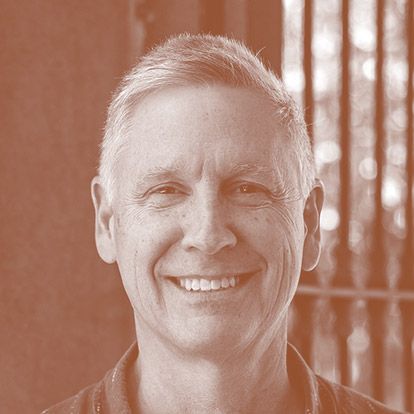
Philip J. Deloria is the Leverett Saltonstall Professor of History at Harvard University, where his research and teaching focus on the social, cultural and political histories of the relations among American Indian peoples and the United States, as well as the comparative and connective histories of indigenous peoples in a global context. His first book, Playing Indian (1998), traced the tradition of white “Indian play” from the Boston Tea Party to the New Age movement, while his 2004 book Indians in Unexpected Places examined the ideologies surrounding Indian people in the early twentieth century and the ways Native Americans challenged them through sports, travel, automobility, and film and musical performance. He is the co-editor of The Blackwell Companion to American Indian History (with Neal Salisbury) and co-author, with Alexander Olson, of American Studies: A User’s Guide (2017). His most recent book Becoming Mary Sully: Toward an American Indian Abstract (2019) explores family history and the abstract designs and social interpretation of Dakota Sioux artist, Mary Sully, and has led him to a series of writings focused on music and art. He is currently finishing a book on the epistemological worlds made visible by the extraordinary Leonid meteor storm of 1833. Deloria previously taught at the University of Colorado and University of Michigan, where he held the Carroll Smith-Rosenberg Collegiate Chair. He holds a Ph.D. in American Studies from Yale University.

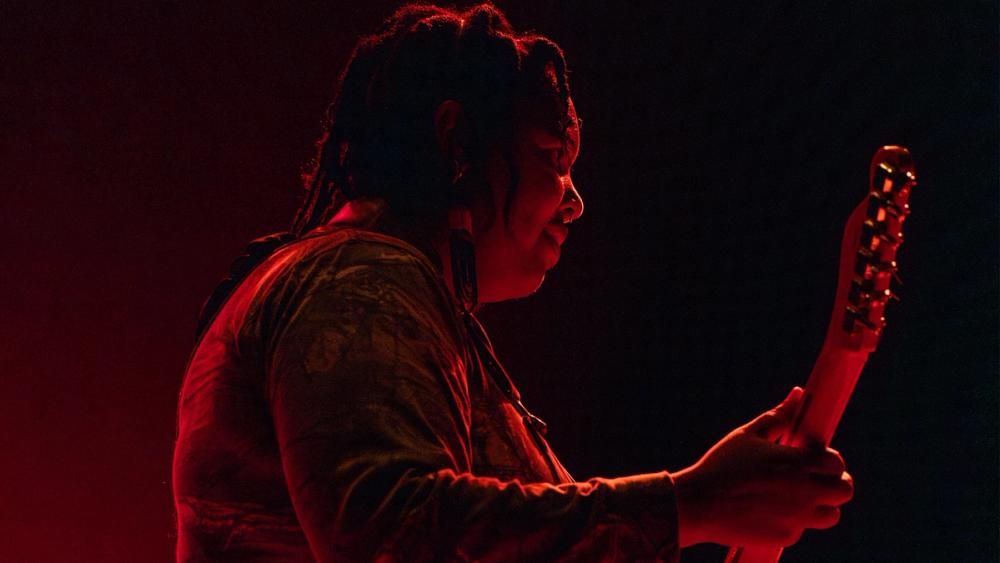
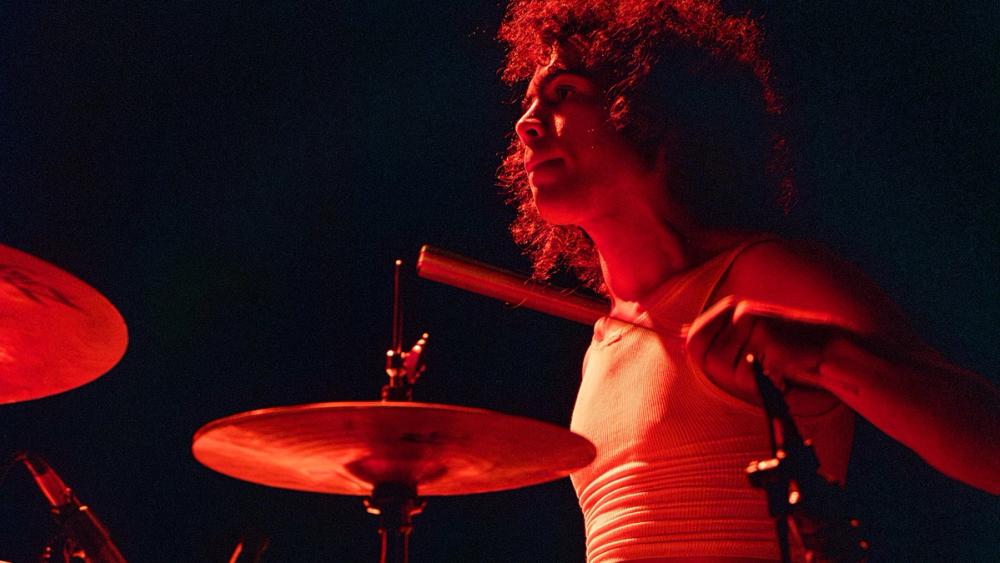
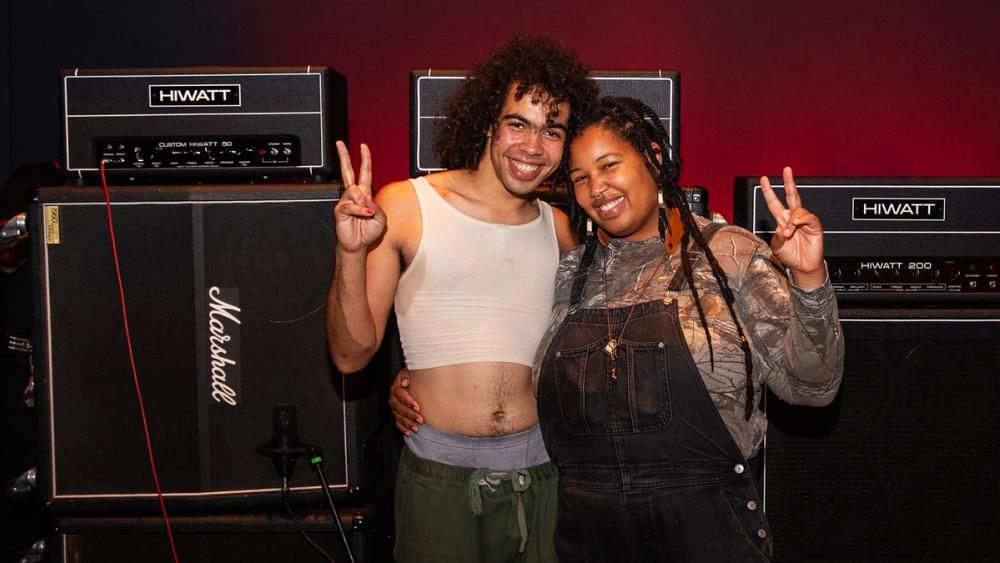
Divide and Dissolve is the Melbourne-based instrumental doom metal band of soprano saxophonist and guitarist Takiaya Reed (Black//Cherokee). Divide and Dissolve are committed to creating music that “honouring ancestors and Indigenous land, to oppose white supremacy, and to work towards a future of Indigenous sovereignty and Black liberation.” Divide and Dissolve’s album Systemic (2023), produced by Ruban Nielson, followed their atmospheric debut album Gas Lit (2021), distributed by the Invada label. Divide and Dissolve have recently supported Chelsea Wolfe on her North American tour with critical acclaim. With the band's tectonic sound, Takiaya has created original film scores and experimental classical solo performances. She opened the 2024 Sculpture Center summer program in New York , followed by a headline tour across the US commencing in September.
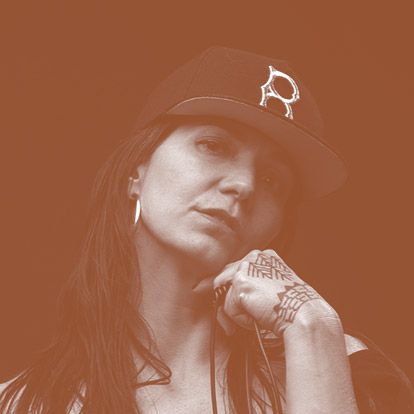
Ginger Dunnill - Originally from Maui, Hawai’i, New Mexico based creative Ginger Dunnill is producer, journalist, curator, community organizer, DJ and sound artist. She collaborates with artists globally, creating work that inspires human connection, promotes plurality and advocates for social justice. Ginger is the founder of Broken Boxes Podcast, the decade long celebrated underground broadcasting project amplifying revolutionary voices in the arts. Ginger has exhibited internationally including at IoDeposito, Italy, Washington Project for The Arts, Washington, DC and the Whitney Museum of American Art in New York. Over the past two decades Ginger has produced numerous social engagement projects, community programs and public exhibitions in collaboration with other artists and activists. She is currently working as a creative advisor for numerous prominent artists and musicians and touring the world as a DJ and performer.
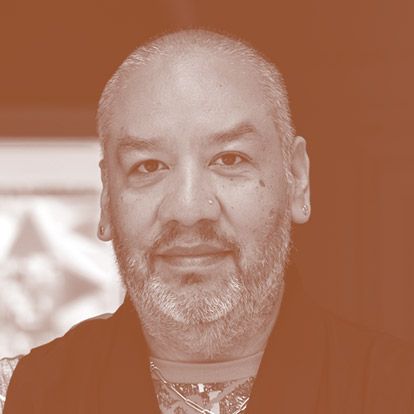
Jeffrey Gibson (born 1972) is an interdisciplinary artist. A member of the Mississippi Band of Choctaw Indians and of Cherokee descent, Gibson grew up in major urban centers in the United States, Germany, and Korea. He received a bachelor of fine arts in painting from the School of the Art Institute of Chicago in 1995 and master of arts in painting at the Royal College of Art, London, in 1998. He was awarded honorary doctorates from Claremont Graduate University (2016) and the Institute of American Indian Arts (2023). He is currently an artist-in-residence at Bard College. Gibson has received many distinguished awards, including a Joan Mitchell Foundation Painters and Sculptors Grant (2012), and a John D. and Catherine T. MacArthur Foundation Fellowship Award (2019). Gibson also conceived and co-edited the landmark volume An Indigenous Present (2023), which showcases diverse approaches to Indigenous concepts, forms, and media. His work is included in the permanent collections of the Denver Art Museum; Museum of Fine Arts, Boston; Museum of Modern Art, New York; National Gallery of Canada; Portland Art Museum; Smithsonian National Museum of the American Indian; and Whitney Museum of American Art, among others.

Miwese Greenwood belongs to the Otoe-Missouria, Ponca and Chickasaw nations and resides in Edmond, Oklahoma. He has taken part in his culture all his life. Being introduced to singing at the drum by his father. He has become a well-known traditional singer in the pow wow arena and has been asked to sing for many performances all over the United States. Known for his singing abilities, he is also an accomplished traditional flute player performing at events throughout Indian country.

Jayson HighWalking was raised on the Wind River Reservation, located out of Wyoming. He is enrolled in the Eastern Shoshone tribe, and he also has relatives amongst the Omaha, Cheyenne and Lakota people. He graduated with his associates degree in community health from Haskell Indian Nations University in 2015. Jayson also likes to stay multifaceted in multiple areas of work and has recently graduated and has passed his EPA certification, in order to become an HVAC technician. Jayson HighWalking is 31 years old and is in an amazing marriage with his spouse, Sarah Ortegon HighWalking. They have one 2 year old named Aenohe (Aww-No) Highwalking. Cookie Monster is his spirit animal.

Sarah Ortegon HighWalking (jingle dancer) was born in Denver, CO into a family of 12 children. Ortegon HighWalking graduated with her BFA from the Metropolitan State University of Denver in 2013. Ortegon HighWalking studied art history in Italy during the summer of 2012. The main theme in Ortegon High Walking’s work is her Indigenous Heritage and her relationship to the land. In 2013 Ortegon HighWalking was titled Miss Native American, USA and the focus of her platform was healthy living. She then traveled to Moldova in Europe, Guatemala, and throughout the U.S. performing the jingle dress dance with the Native Pride Dance Troupe. Ortegon HighWalking was the artist for the MALCS conference in Laramie, WY at the University of Wyoming and had a solo art exhibition. Ortegon HighWalking is also featured in PBS’s, “The Art of Home; A Wind River Story” which was nominated for an Emmy in August of 2020. She was an extra in NBC’s TV series, “Jamestown”, as well as Paramount TV series, “1923”. In March of 2020, Ortegon HighWalking collaborated with Choctaw artist Jeffery Gibson and performed in Times Square, NY for the Midnight Moment titled, “She Never Dances Alone.” This was featured on over 60 monitors in Times Square, NY, from March 1, 2020 - July 31, 2020 at 11:57-Midnight each night. The in person jingle dress dance performance was March 7, 2020. Ortegon HighWalking has recently been accepted into the National Museum of Women in the Arts, “Women to Watch” Exhibit, happening in Washington, D.C. in 2024. She performed and danced in collaboration with Gibson at the Venice Biennale along with 26 other dancers in April of 2024 as well as October of 2024. (jingle dancer) was born in Denver, CO into a family of 12 children. Ortegon HighWalking graduated with her BFA from the Metropolitan State University of Denver in 2013. Ortegon HighWalking studied art history in Italy during the summer of 2012. The main theme in Ortegon High Walking’s work is her Indigenous Heritage and her relationship to the land. In 2013 Ortegon HighWalking was titled Miss Native American, USA and the focus of her platform was healthy living. She then traveled to Moldova in Europe, Guatemala, and throughout the U.S. performing the jingle dress dance with the Native Pride Dance Troupe. Ortegon HighWalking was the artist for the MALCS conference in Laramie, WY at the University of Wyoming and had a solo art exhibition. Ortegon HighWalking is also featured in PBS’s, “The Art of Home; A Wind River Story” which was nominated for an Emmy in August of 2020. She was an extra in NBC’s TV series, “Jamestown”, as well as Paramount TV series, “1923”. In March of 2020, Ortegon HighWalking collaborated with Choctaw artist Jeffery Gibson and performed in Times Square, NY for the Midnight Moment titled, “She Never Dances Alone.” This was featured on over 60 monitors in Times Square, NY, from March 1, 2020 - July 31, 2020 at 11:57-Midnight each night. The in person jingle dress dance performance was March 7, 2020. Ortegon HighWalking has recently been accepted into the National Museum of Women in the Arts, “Women to Watch” Exhibit, happening in Washington, D.C. in 2024. She performed and danced in collaboration with Gibson at the Venice Biennale along with 26 other dancers in April of 2024 as well as October of 2024.

Layli Long Soldier holds a B.F.A. from the Institute of American Indian Arts and an M.F.A. from Bard College. Her poems have appeared in POETRY Magazine, The New York Times, The American Poet, The American Reader, The Kenyon Review, BOMB and elsewhere. She is the recipient of an NACF National Artist Fellowship, a Lannan Literary Fellowship, a Whiting Award, and was a finalist for the 2017 National Book Award. She has also received the 2018 PEN/Jean Stein Award, the 2018 National Book Critics Circle Award, a 2021 Academy of Arts and Letters Award for Literature, and the 2021 Michael Murphy Memorial Poetry Prize in the UK. She is the author of Chromosomory (Q Avenue Press, 2010) and WHEREAS (Graywolf Press, 2017). She is a mentor in the MFA Creative Writing Program at the Institute of American Indian Arts and resides in Santa Fe, New Mexico.
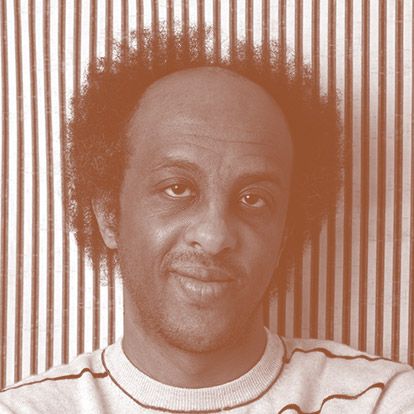
Dinaw Mengetsu is the author of four novels, Someone Like Us (Knopf 2024), All Our Names (Knopf, 2014), How To Read the Air (Riverhead, 2010), and The Beautiful Things That Heaven Bears (Riverhead, 2007). A native of Ethiopia who came with his family to the United States at the age of two, Mengestu is also a freelance journalist who has reported about life in Darfur, northern Uganda, and eastern Congo. His articles and fiction have appeared in the New York Times, New Yorker, Harper’s, Granta, and Rolling Stone. He is a 2012 MacArthur Fellow and recipient of a Lannan Literary Fellowship for Fiction, National Book Foundation 5 Under 35 Award, Guardian First Book Award, and Los Angeles Times Book Prize, among other honors. He was also included in The New Yorker’s “20 under 40” list in 2010. His work has been translated into more than fifteen languages. He holds a BA from Georgetown University and an MFA from Columbia University. He is the director of the Written Arts Program at Bard College, and the director of the Center for Ethics and Writing.

Caroline Monnet (Anishinaabe/French) is a multidisciplinary artist from Outaouais, Québec. She studied sociology and communications at the University of Ottawa and the University of Granada (Spain). Her work has been featured at the Whitney Biennial in New York, the Toronto Biennial of Art, the KØS Museum (Denmark), the Musée d’art contemporain de Montréal, and the National Gallery of Canada. Solo exhibitions include the Montreal Museum of Fine Arts, Schirn Kunsthalle Frankfurt, Arsenal Contemporary (New York), the Centre d’art international de Vassivière (France), and the Art Museum at the University of Toronto. Her work is included in numerous collections in North America and in the permanent UNESCO collection in Paris. In 2020, Monnet received the Prix Pierre-Ayot and was a finalist for the Sobey Art Award; she is also the recipient of the Merata Mita Fellowship of the Sundance Institute, and the Hnatyshyn Foundation’s REVEAL Indigenous Art Awards; she was recently named a Companion of the Ordre des arts et des lettres du Québec. Monnet is based in Mooniyang/Montréal.
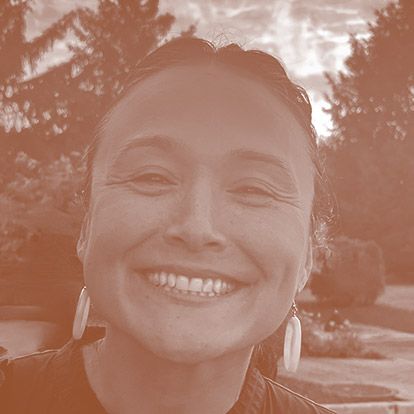
Brandi Norton (Iñupiaq) is a curator and dancer based in Rhinebeck, New York. She works as curator of public programs at Bard Center for Indigenous Studies where she had commissioned original choreography and artwork and implemented collaborative support for Indigenous students. She holds a BFA in dance from the Juilliard School, and an M.S.Ed in early childhood education from Bank Street Graduate School. She works to bring Indigenous artists, educators and thought leaders to Bard College for public facing events. Before joining the Center for Indigenous Studies, she co-founded the dance company OtherShore, and was a dancer and teacher with the Trisha Brown Dance Company for nine seasons. Norton also had the privilege of being an elementary school teacher in New York City for eight years.

Jami Powell (she/her) is the Associate Director for Curatorial Affairs and Curator of Indigenous Art at the Hood Museum of Art at Dartmouth College where she also serves as a senior lecturer in the Native American and Indigenous Studies Department. Powell is a citizen of the Osage Nation and has a PhD in anthropology from the University of North Carolina at Chapel Hill. During her tenure at the Hood Museum, Powell has curated exhibitions including Form and Relation: Contemporary Native American Ceramics, CIPX Dartmouth with Kali Spitzer and Will Wilson, Madayin: Eight Decades of Aboriginal Bark Painting from Yirrkala, and This Land: American Engagement with the Natural World. Powell’s co-edited volume titled Re-Envisioning American Art: Transforming Museum Practice will be released in January 2025. She is on the board of directors for the Native American Art Studies Association and serves on advisory boards for Panorama and the Terra Foundation for American Art. Powell’s upcoming projects include the first solo exhibition and catalogue for Chemehuevi photographer and artist Cara Romero.

Jolene Rickard is an Associate Professor at Cornell University in the departments of History of Art and Art, and the former Director of the American Indian and Indigenous Studies Program 2008-2020. She is a visual historian, artist and curator interested in the intersection of Indigenous art, cultural theory and the forces of settler colonialism. Her research centers on the expression of multiple sovereignties within Indigenous art and culture globally and she has been at the forefront of comparative understandings of global Indigenous art with research projects in the Americas, Australia, and Aotearoa (New Zealand). She has served as a curator and curatorial advisor, most recently for Deskaheh in Geneva, 1923-2023 : Defending Haudenosaunee Sovereignty (Geneva, Switzerland, 2023) and in an ongoing role as consultant to the Niagara Falls State Park (NYS) interpretive museum. She also co-curated two of the four inaugural exhibitions of the Smithsonian’s National Museum of the American Indian (2004-2014). She is on the editorial board of American Art, a founding board member for the Otsego Institute for Native American Art and is a member of the Forge Project’s Indigenous Steering Council. She is a citizen of the Tuscarora Nation, Turtle Clan and holds a BFA from Rochester Institute of Technology and a Ph.D. from SUNY Buffalo.
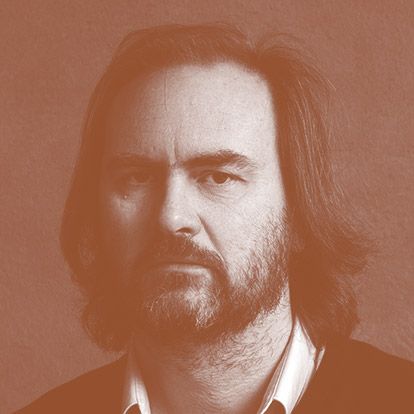
The Jazz Professor is the deejaying alias of Dieter Roelstraete, curator of the Neubauer Collegium for Culture and Society at the University of Chicago. Recent projects at the Neubauer Collegium Gallery have featured the work of Gelitin, Rick Lowe, The Otolith Group, Pope.L, Martha Rosler, Cecilia Vicuña, and Christopher Williams. He previously worked as a curator for documenta 14 in Kassel and Athens in 2017. Prior to that, he served as the Manilow Senior Curator at the Museum of Contemporary Art Chicago (2012-2015), where he organized and co-organized The Way of the Shovel: Art as Archaeology (2015); The Freedom Principle: Experiments in Art and Music 1965 to Now (2015); and Kerry James Marshall: Mastry (2016), among other exhibitions. From 2003 to 2011 Roelstraete was a curator at the Museum van Hedendaagse Kunst Antwerpen in his native Belgium. In recent years, he has also curated large-scale exhibitions at the Fondazione Prada in Milan and Venice, Garage (Moscow) and S.M.A.K. (Ghent). Roelstraete has published extensively on contemporary art and related philosophical issues in numerous catalogues and journals.

Nick Ohitika Najin Souksavath is the Executive Director of the Rocky Mountain Indian Chamber of Commerce. He is dedicated to supporting and empowering Native American students, entrepreneurs and businesses. Nick is of mixed heritage, his mother is Mni Coujou Lakota from the Cheyenne River Sioux Tribe and his father hailing from Laos. Nick served in the United States Army from 2003 to 2010, completing three deployments—one in Nicaragua and two in Iraq. These experiences have profoundly shaped his perspective on life and service. His diverse professional background spans various fields, including banking, Native culture consulting, finance, nonprofit development, ranching, business management and ownership. In 2021 he helped his daughter found Lakota Body Care, Colorado’s only Native American soap company. Nick is an accomplished tailor and Lakota Artist, specializing in Quillwork and Beadwork. He not only makes traditional regalia, but contemporary Native fashion. In October 2023 Nick headlined the Festival of Color Fashion Show in Denver. He is also a member of the Colorado Inter-Tribal Dancers. Driven by a deep love for his family and community, Nick is passionate about helping others and fostering meaningful connections. His commitment to service and advocacy is at the heart of his work with the Rocky Mountain Indian Chamber of Commerce, where he strives to uplift and support Native American voices. Nick performed with the Colorado Inter-Tribal Dancers in collaboration with Jeffrey Gibson at the Venice Biennale, in April of 2024 as well as October of 2024.
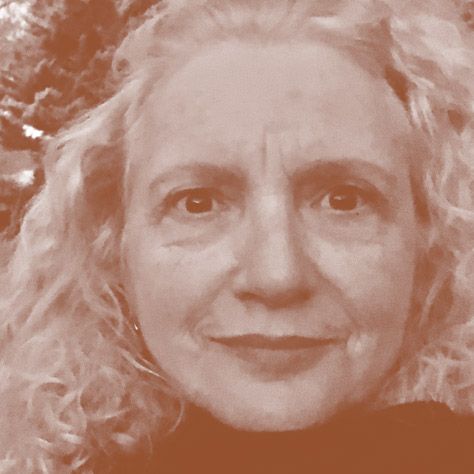
Franca Tamisari is professor of Cultural Anthropology and currently Head of the Cultural Anthropology Program in the Department of Humanities at Ca’ Foscari University of Venice. She lectured at the University of Sydney and The University of Queensland from 1996 to 2004. Her research has led to publications both nationally and internationally on a range of topics, including Australian Indigenous onto-epistemologies and politics, ritual and performance, with particular attention to dance, art, bicultural education, cultural tourism, the politics of representation, and the history of colonial and postcolonial relations in Australia. She is the author of Enacted Relations: Performing Knowledge in an Australian Indigenous Community (2024).
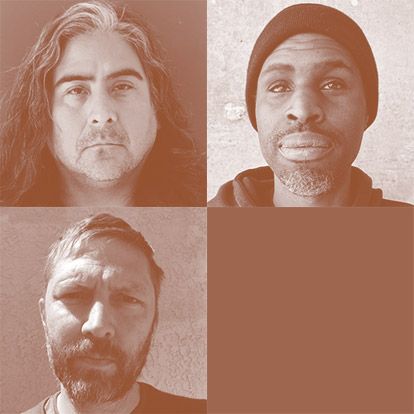
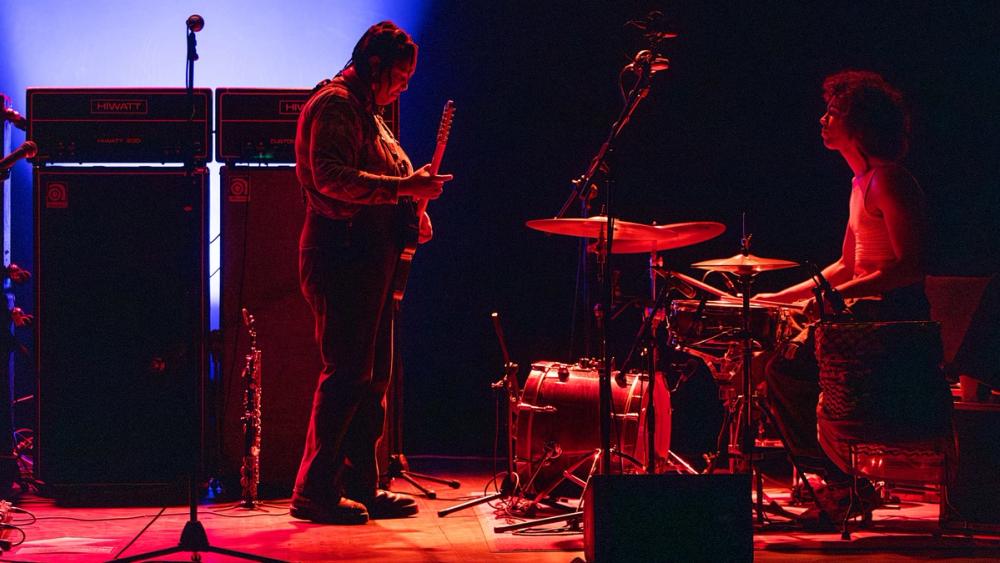
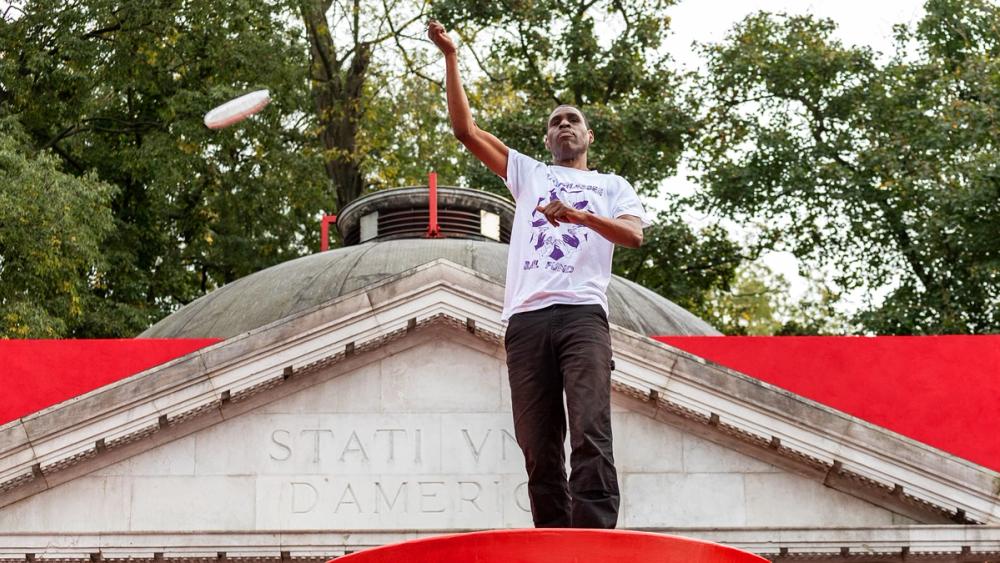
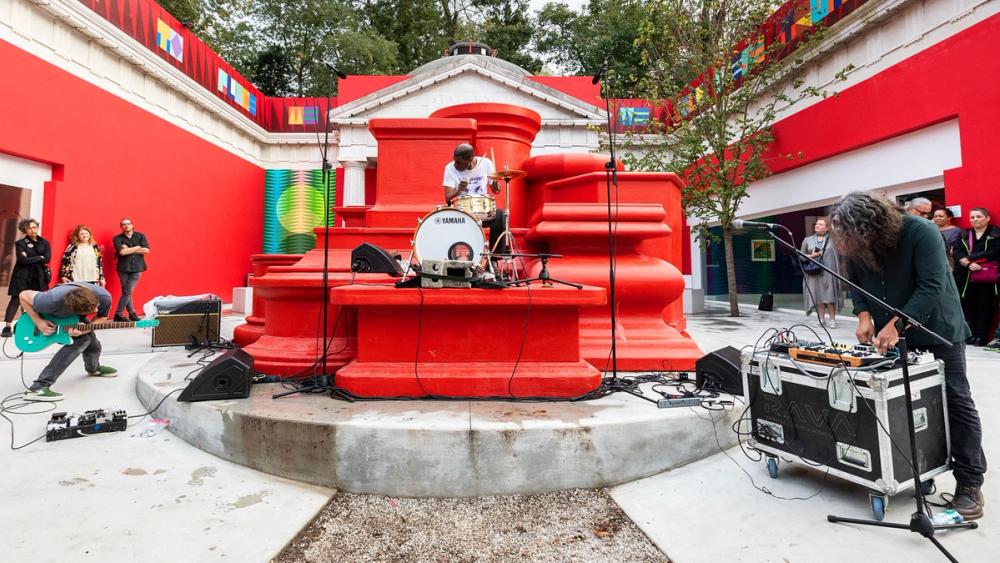
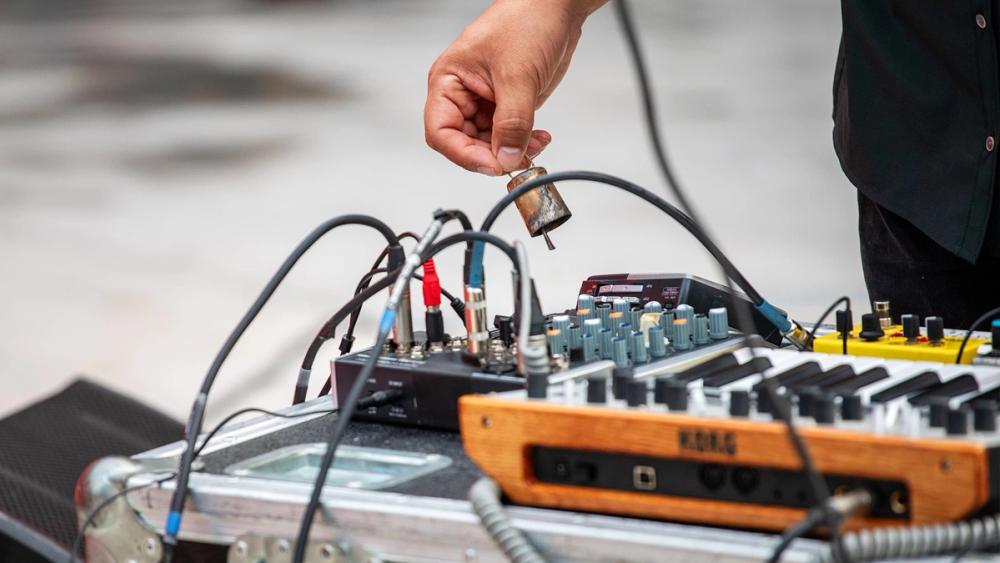
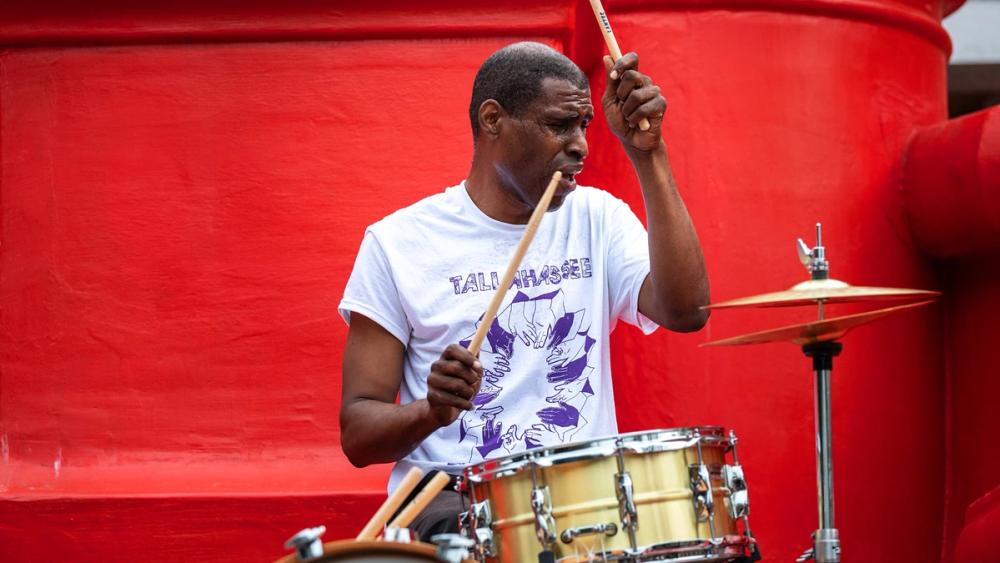
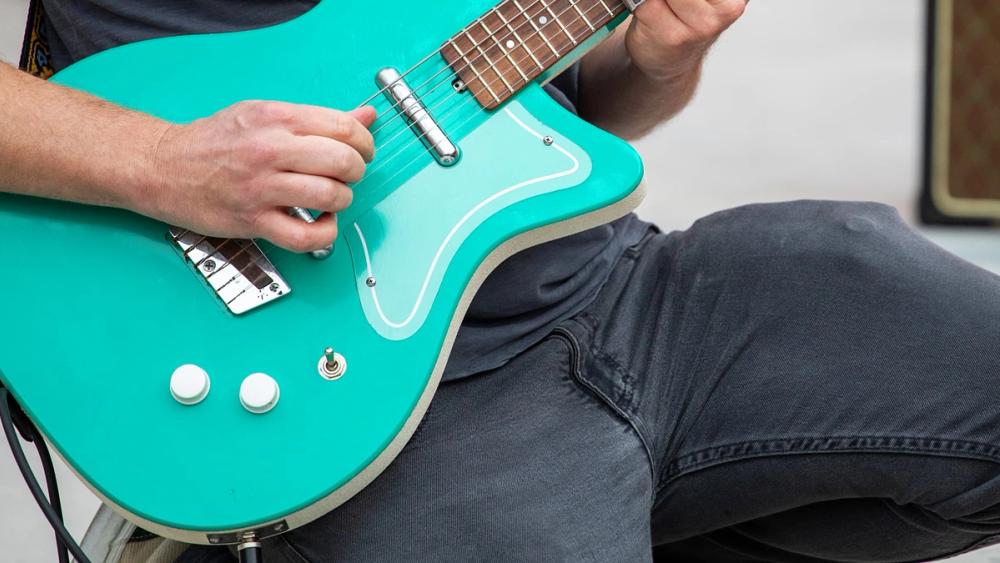
White People Killed Them is a project that came together in 2019, one of several imaginings of new designations, calamities, and celebrations by group members when they all happened to be together in New Mexico. The musical space and interaction modeled by the trio allows for “all ideas to be heard and considered, forming a unified whole that does not trivialize any of its individual parts.” The name of the band, which is also the name of the project, is a group of words commonly paraphrased on many monuments across the United States. Their self-titled debut LP was released on the indie label SIGE Records in 2021.
White People Killed Them is a trio that includes composer Raven Chacon, guitarist John Dieterich, and percussionist Marshall Trammell. Raven Chacon was born at Fort Defiance, Navajo Nation in 1977. Since 1999 he has toured the United States with various solo and group projects, composed chamber works, and developed a curriculum for the Native American Composer Apprentice Project, an education initiative to mentor young composers on the Navajo, Hopi and Salt River Pima reservations. As a solo artist, Chacon has exhibited at the Los Angeles County Museum of Art (2020); the Renaissance Society, Chicago (2020); and the Whitney Biennial, Whitney Museum of American Art, New York (2022); amongst many others. He has performed or had works performed at the San Francisco Electronic Music Festival (2013); Borealis Festival, Bergen, Norway (2021); Huddersfield Contemporary Music Festival, UK (2022); the Perelman Performing Arts Center, New York (2023); Holland Festival, Amsterdam, NL (2023); and Ostrava Festival (2023); in addition to hundreds of concerts over the past 25 years. In 2022, Chacon received the Pulitzer Prize in Music for his composition Voiceless Mass, and in 2023 he was awarded the MacArthur Fellowship. Self-styled Music Research Strategist Marshall Trammell is a US-born, California-based Experimental/Creative Music percussionist, conductor, and Digital Community Archives Project Manager and Curator. A founding member of White People Killed Them (SIGE Records), Trammell performs with a number of Creative Improvised Music outfits. He is currently a resident artist at the Sonic Acts Biennale (Amsterdam) and ArabAmp/Temescal Art Center (TACmusic) in Oakland, CA. John Dieterich is a Minnesota-based guitarist and composer in the band Deerhoof, which he has been a member of since 1999. In that time, Deerhoof has released 25 critically acclaimed albums, toured extensively throughout the world, collaborated with jazz luminaries (including Wadada Leo Smith and Nels Cline), physicist James Beacham (as part of the first musical performance at CERN’s Large Hadron Collider), Konono No. 1, and created an original score to Harry Smith’s Heaven and Earth Magic. In addition, John has been or continues to be a member of a number of collaborative groups, including Endlings, White People Killed Them, Claire Cronin, Gorge Trio, Powerdove, Colossamite, Natural Dreamers, his duets with guitarist Mary Halvorson and Tashi Dorji, and many others.
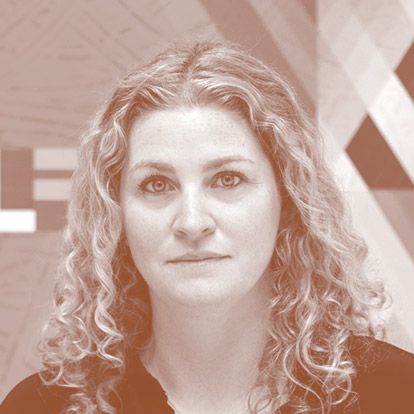
Abigail Winograd is an independent curator and writer. She was previously curator-at-large and MacArthur Fellows Program Fortieth Anniversary Exhibition Curator at the University of Chicago's Gray Center for the Arts and Inquiry, a role she originated at the Smart Museum of Art in Chicago. She is currently co-director and chief curator of Pueblo Unido Gallery, a community-generated art space situated within Centro Romero, a social service organization serving and advocating for the immigrant community on Chicago's North Side. Winograd's scholarly work focuses on postwar abstraction in South America and institutional approaches to expanding canonical histories. She has held positions at the Frans Hals Museum, Museum of Contemporary Art Chicago, Hirshhorn Museum and Sculpture Garden, Blanton Museum of Art, and Art Institute of Chicago and has curated exhibitions around the world. She has contributed to books and museum catalogues, published academic articles, and written for publications such as Bomb, Mousse Magazine, Frieze, and Artforum. She received a doctorate in art history from the University of Texas at Austin and has additional degrees from Northwestern University and the University of Wisconsin-Madison.

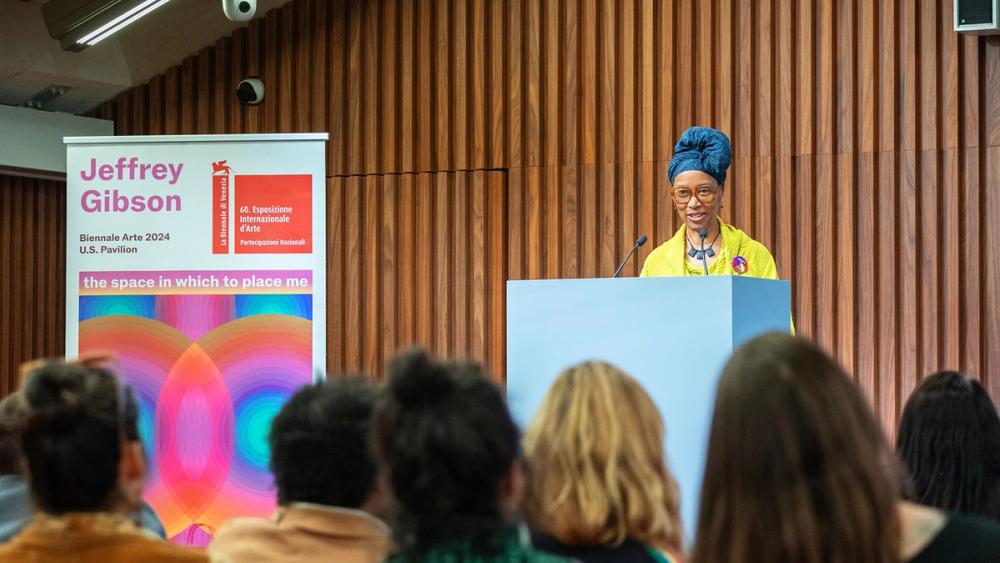
Welcome and Remarks
Opening Panel (Afternoon)
Performance: Divide & DissolveSession 1 (Morning)
Session 2 (Afternoon)
Reading: Layli Long SoldierSession 3 (Morning)
Performance: White People Killed Them
Closing Celebration (Evening)


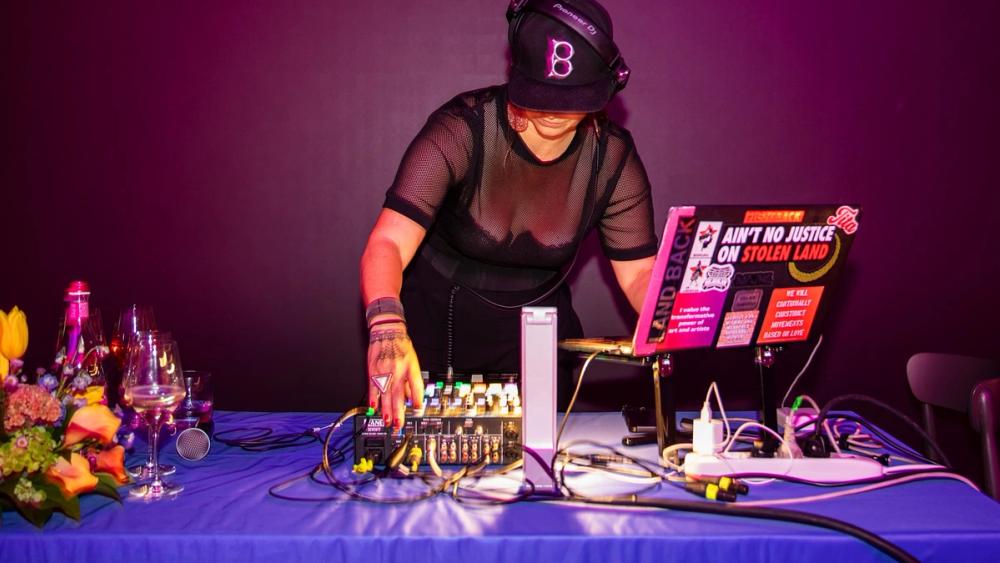
Please find below a selection of conversations and performances from throughout the week.
- > Convening Highlights
- > Opening Indigenous Dance Performance
- > Welcome Remarks and Opening Panel
- > Performance by Divide and Dissolve
- > Panel presentation — Future Making: Labor, Economies, Arts
- > Panel presentation — Beads, Connections, Worlding
- > Reading by Layli Long Soldier
- > Panel presentation — Movement, Belonging, Transgression
- > Introductory Jingle Dance Program
- > Performance by White People Killed Them